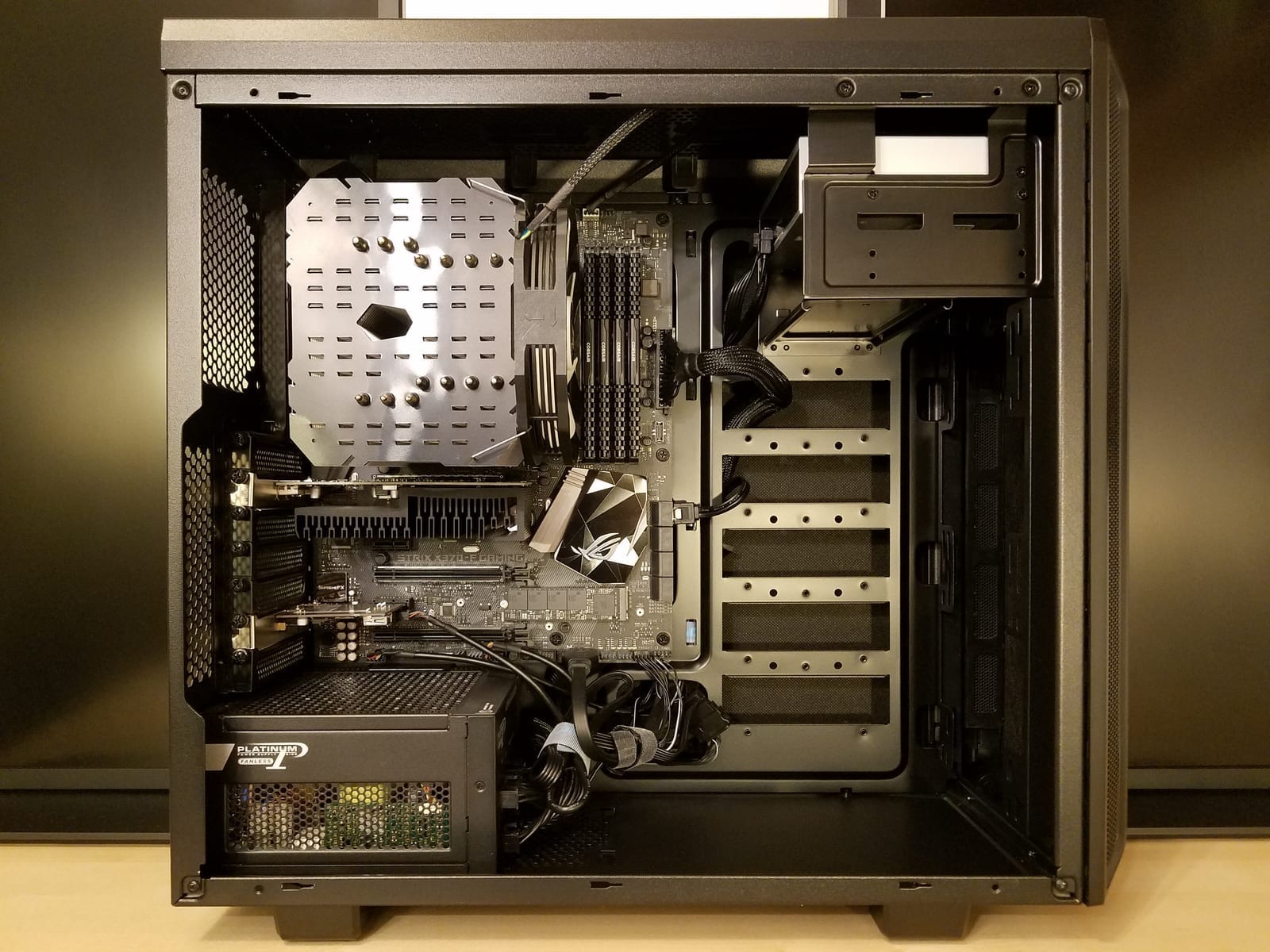
Fotoğraf: Bretwa, Wikimedia Commons (CC BY-SA 4.0)
Running an AI Model on Your Own Computer
The hardware, tools, and realistic expectations for running a model on your own machine without a cloud subscription.
Nova AI News Editor
August 22, 2026 · 1 min read
Why Run It Locally?
The three biggest reasons: data privacy, continuity, and cost. If you work with sensitive documents, keeping the data on your device is a serious advantage. Not depending on an internet connection or service outages is a bonus. Under heavy use over the long run, a one-time hardware cost can come in below monthly subscriptions.
What Actually Determines the Hardware You Need?
The answer is almost always memory. Graphics card memory (VRAM) determines whether the model fits; if it doesn't, it spills into system memory and speed drops sharply. A rough guide: small models run comfortably with 8 GB of VRAM, mid-sized models with 16 GB, and larger models with 24 GB and up. Laptops with unified memory also do surprisingly well at this.
What Is Quantization?
Storing the model's numerical weights at lower precision can cut memory requirements by half or even to a quarter. The trade-off is a small drop in quality. In practice, 4-bit quantized versions are considered good enough for the bulk of everyday use.
Tools to Get Started
Desktop applications and command-line tools that download and run a model with a single command have made this considerably easier. Most of them also open a local API server, so you can point your own application at a local model without changing anything.
Realistic Expectations
Local models can't match the complex reasoning performance of the largest cloud models. But for jobs like summarizing, rewriting, classification, and code completion, the difference isn't noticeable for most users.
Conclusion
Running a model locally is no longer expert territory. Set your expectations correctly and invest in memory, and you can handle most day-to-day work while keeping your data on your own machine.
Related Articles

How Students Should Actually Use AI
Letting AI do your homework kills the learning. Here is how to use it as a tutor instead.
Read more→
What's the Difference Between Machine Learning and Deep Learning?
We explain two commonly confused concepts in plain language, along with when you should reach for each one.
Read more→
6 Rules for Writing Prompts That Get Better Results
Getting much better output from the same model isn't about magic words — it's about structuring the request properly.
Read more→Comments
No comments yet — be the first to comment.